Best Plants and Turf for Clay Soil in South-East Melbourne
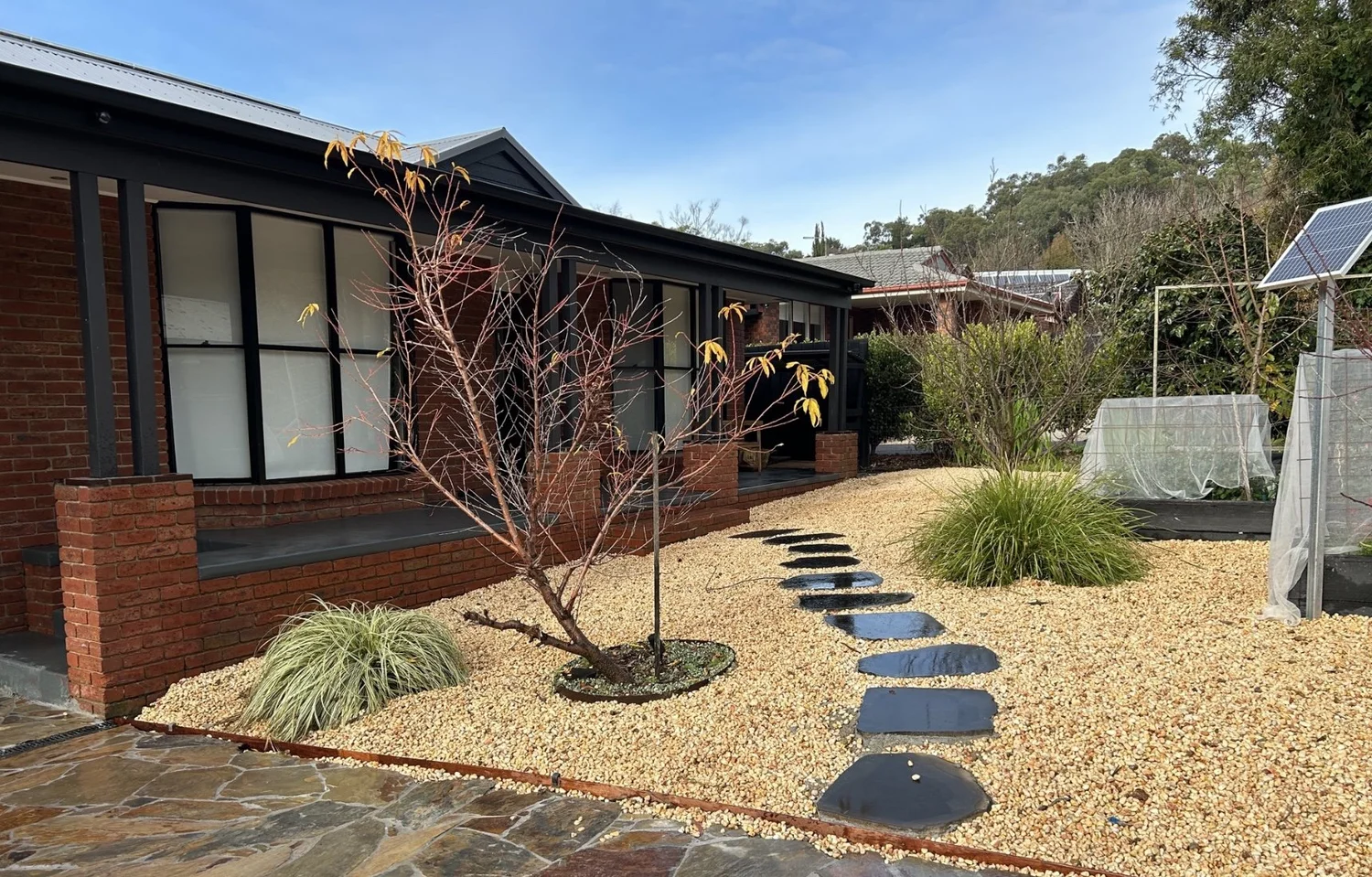
If you've ever tried digging a hole in a new backyard in Officer, Pakenham or Clyde, you know the feeling. The spade bounces off it. In winter it sticks to your boots, and in summer it sets like a brick and cracks. Heavy clay is common across Melbourne's south-east, and it's behind a lot of drowned lawns and dead shrubs.
The good news is clay isn't all bad. It holds water and nutrients well, and plenty of plants are happy in it. The trick is to sort out the structure first, then pick plants that cope with clay's wet winters and dry summers.
Step 1: Work out what kind of clay you have
Not all clay behaves the same. Some clays are dispersive (sodic) - they turn to slurry when wet and set hard when dry. That type usually responds well to gypsum. A simple jar test helps:
- Drop a few small, dry crumbs of soil into a clear jar of rainwater or distilled water. Don't stir.
- Leave it for a few hours, up to 24.
- If the water around the crumbs turns cloudy or milky, the soil is dispersive and gypsum will likely help. If the crumbs just slump but the water stays fairly clear, gypsum is less likely to help. Organic matter is your main tool.
Gardening Australia and the Corangamite CMA soil health knowledge base both describe versions of this test (links below).
Step 2: Improve the soil before you plant
- Gypsum (for dispersive clay). Follow the product's application rate and work it into the top layer.
- Organic matter. Dig in compost or well-rotted manure, and keep adding it. This is what really builds soil structure over time.
- Don't work clay when it's wet. Digging or rotary-hoeing sodden clay smears it and makes things worse. Wait until it's just damp.
- Mulch. A good layer of mulch stops clay baking and cracking in summer.
- Fix the drainage. If water sits in the yard for days, no plant list will save you. Raised beds, falls and drainage come first. That's often a landscaping job more than a gardening one.
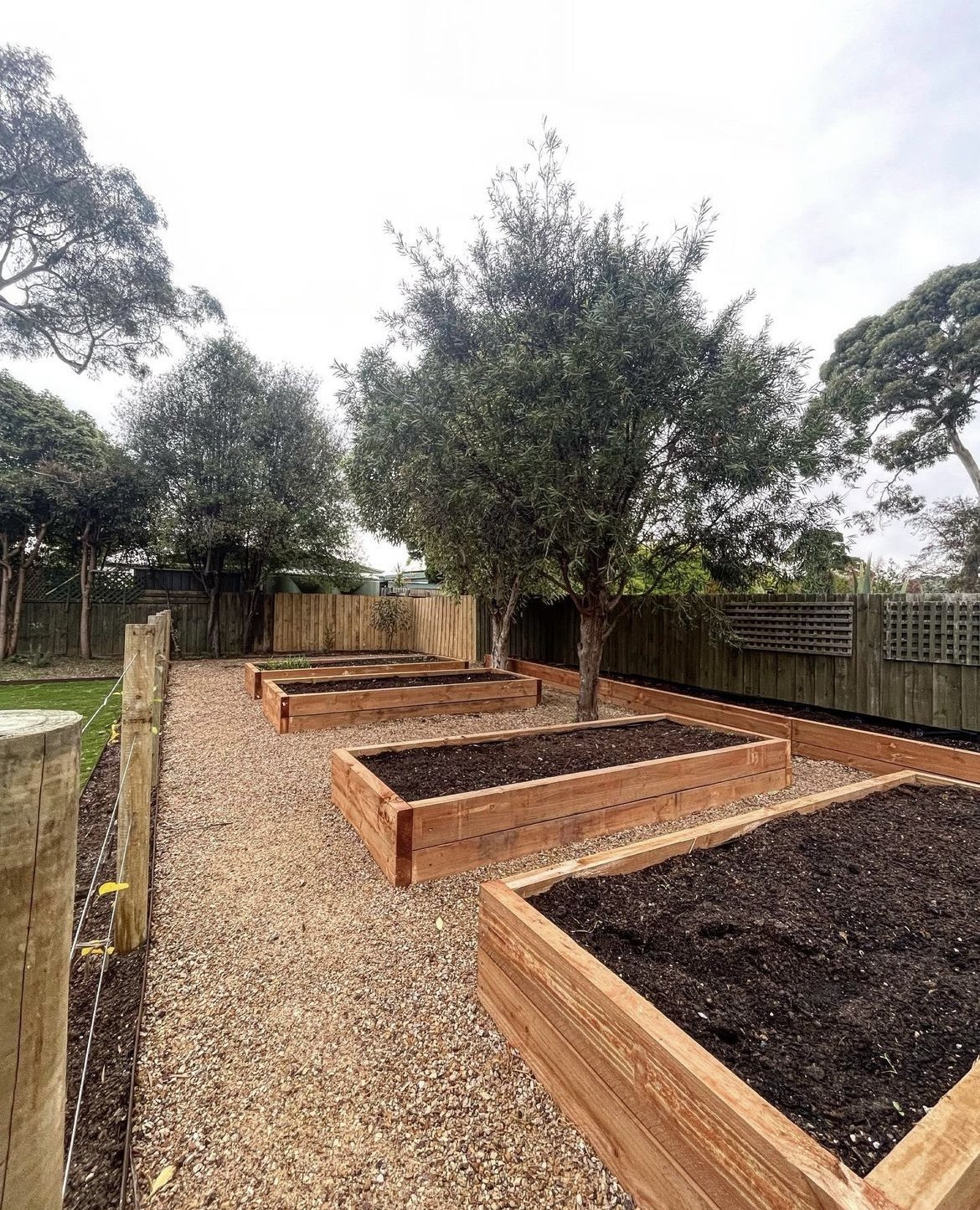
- Think about raised beds. Sleeper or block-edged beds lift roots above the wettest soil. The same materials we use for retaining walls double as garden-bed edging.
Step 3: Choose plants that cope with clay
The Indigenous Plant Guide for the City of Casey and Cardinia Shire is the best local starting point. It's produced by both councils and hosted online by Royal Botanic Gardens Victoria. It lists each plant's growing conditions and which local "vegetation zones" it suits. Here are some that the guide says grow in poorly drained or heavy soils, which is typical of clay.
Shrubs
- Hop Goodenia (Goodenia ovata). Grows in soil with good or poor drainage, and handles wet soil that dries out in summer. Bright yellow flowers from August to February.
- Prickly Moses (Acacia verticillata). Grows in good and poorly drained soil, and tolerates alkaline, wet soil that dries out in summer. Good for hedging.
- Prickly Tea-tree (Leptospermum continentale). Copes with poor drainage and temporary waterlogging. White flowers October to March, and useful as a hedge.
- Swamp Paperbark (Melaleuca ericifolia). Copes with wet soil that dries in summer, and moderate salinity.
- Common Cassinia (Cassinia aculeata). The guide says it "favours heavy soil with good drainage". It's a tough shrub, but its leaves can irritate skin.
- Common Heath (Epacris impressa). Victoria's floral emblem. Likes mulch and tolerates waterlogging.
Grasses, sedges and rushes (great for wet spots and swales)
- Tall Sedge (Carex appressa). Favours poor drainage, and copes with waterlogging and even shallow water.
- Red-fruited Saw-sedge (Gahnia sieberiana). Tolerates poor drainage. The guide suggests planting it instead of the weed Pampas Grass.
- Knobby Club-rush (Ficinia nodosa). Favours poorly drained soil but also tolerates drought.
Groundcovers
- Bidgee-widgee (Acaena novae-zelandiae). Tolerates poor drainage, and dry and wet soil. Good for binding soil on slopes.
- Ivy-leaf Violet (Viola hederacea). Favours poorly drained soil and tolerates waterlogging. A pretty groundcover among shrubs.
Trees (for bigger blocks, well away from the house)
- Swamp Gum (Eucalyptus ovata). Favours poorly drained soil. It's a big tree (8–30 m), so it's for acreage, not a courtyard.
Check each plant's zone in the guide for your suburb before you buy. Look at its mature size too, and the guide's notes on distance from pipes and power lines.
What about turf on clay?
Lawns struggle on clay mostly because of poor drainage and compaction, not the grass itself. Preparation matters more than variety:
- Rip or cultivate the subsoil (when it's not wet), add gypsum if the jar test says so, and lay turf on a decent layer of quality turf underlay soil.
- Build in a fall so water runs off the lawn and doesn't sit on it.
- Choose a variety for your conditions. hipages' turf guide (2026) describes several options. Sir Walter buffalo handles full sun to heavy shade and is drought and frost tolerant. Eureka kikuyu is hard-wearing and grows well in colder climates, but needs more maintenance. Velvetene "can grow in clay or sandy soils". Ask your turf farm what they recommend for local clay.
- Synthetic turf gets around the growing problem, but not the drainage problem. On clay it needs a properly prepared, free-draining base, or water will sit underneath. See our synthetic vs natural turf guide.
Where clay is a big deal locally
New estates in Officer, Pakenham and Clyde often have builder's fill over heavy clay. Established suburbs like Narre Warren and Berwick have older clay gardens that have compacted over the years. Parts of Cranbourne are sandier, so check what you've got before you buy plants.
Want it done for you?
We prepare soil, sort out drainage, build raised beds and garden edging, lay turf and plant out gardens across Melbourne's south-east. There's no minimum job size, so a couple of garden beds is fine. See our services and gallery.
Book a free on-site quote and we'll come out, have a look and go through everything with you.
Sources (accessed 1 October 2026)
- City of Casey & Cardinia Shire Council, Indigenous Plant Guide (hosted by Royal Botanic Gardens Victoria; also at casey.vic.gov.au).
- Cardinia Shire Council, "Cardinia indigenous plant guide" (online).
- Corangamite CMA Soil Health Knowledge Base, "Do I need to apply gypsum?"
- Corangamite CMA Soil Health Knowledge Base, "How do I manage the impact of sodic soils?"
- ABC Gardening Australia, "Clay Soil Test".
- ABC Gardening Australia, "Working With Clay".
- hipages, "How Much Does Turf Cost? [2026]" (turf variety descriptions), updated 20 Jan 2026.