Synthetic vs Natural Turf for Melbourne Backyards
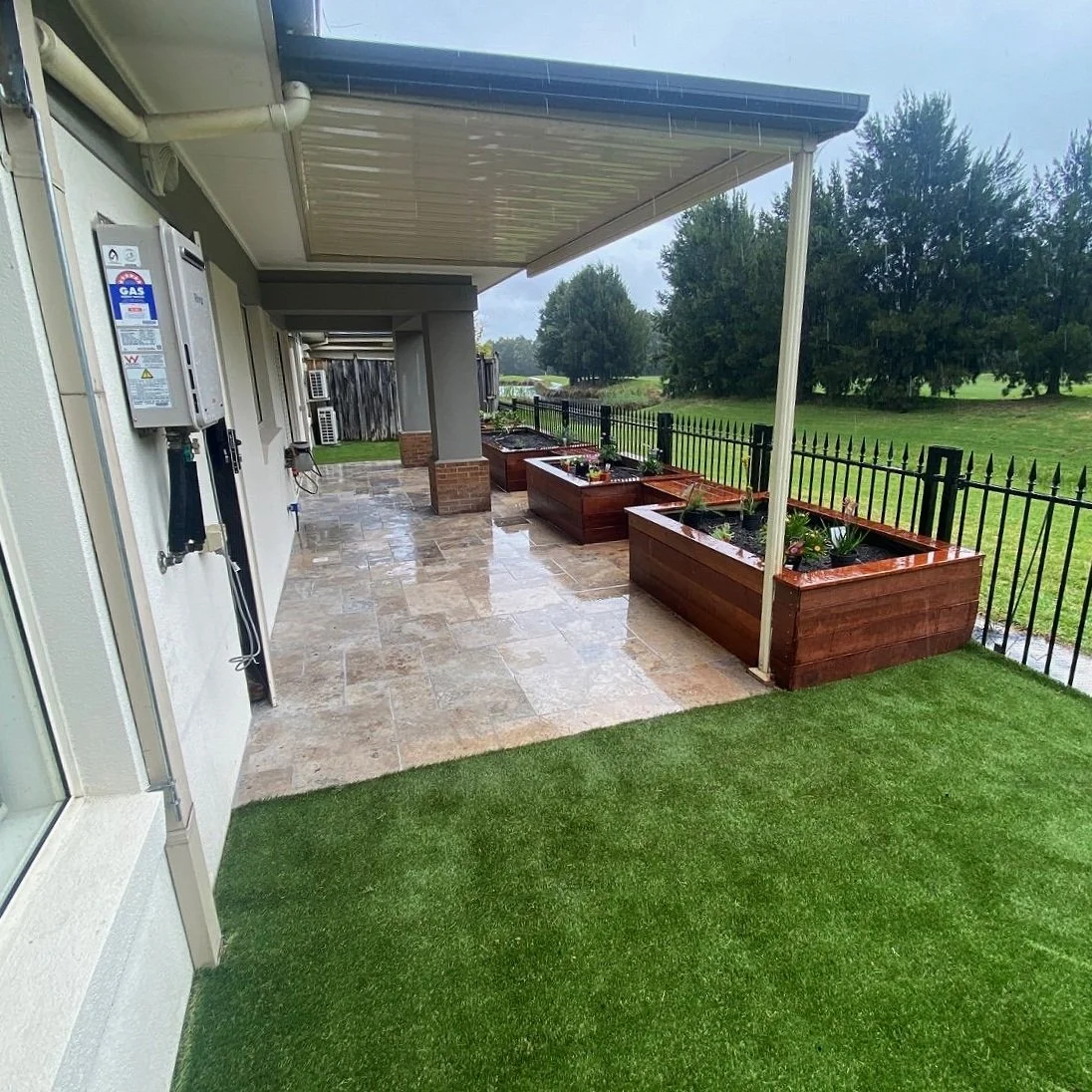
"Should we go synthetic or real?" It's a common question on new-build and makeover jobs. Both can look great. Both can be a letdown if they're put in the wrong spot or laid on a poor base. Here's an honest comparison for Melbourne conditions.
Cost: upfront and over time
Synthetic usually costs a lot more upfront than natural turf. Natural turf is the cheaper way to get a lawn down on day one, and the variety you pick makes a difference too.
Over time, the picture changes. With synthetic you save on watering, mowing, fertiliser and returfing over the years. A good synthetic product should last many years and come with a solid warranty, so ask how long it is and what it covers. Natural turf keeps costing a bit every year in water, fertiliser and mowing, but unlike synthetic it never needs replacing as a whole.
Site prep matters for either option. Excavation, levelling, drainage, edging and removing the old lawn can add a fair bit to the job, especially with tight access. That's why it pays to get a quote based on your actual yard.
Heat: the big one people don't expect
Synthetic turf in full sun gets hot. Really hot. The NSW Chief Scientist & Engineer did an independent review of synthetic turf in 2022. It found that on hot summer days, with air temperatures in the mid-30s or higher, unshaded synthetic turf can be up to 38°C hotter than natural turf at the surface. The review also noted the effect can be felt on days below 30°C.
A literature review in the same report found four Australian studies in Mediterranean climates, including Victoria. All of them recorded synthetic surface temperatures above 70°C.
Natural turf stays cooler because it holds water and cools itself as that water evaporates.
What this means for you: if the area gets full afternoon sun and kids or dogs will be on it in summer, natural turf (or shade over synthetic) is worth serious thought. Some synthetic products are designed to run cooler, but none are as cool as a watered lawn.
Water
Natural turf needs water to get established. New turf takes a few weeks to root in properly, and needs regular watering in that time. It also needs ongoing watering through a Melbourne summer to stay green. Some varieties, like Sir Walter buffalo and Nullarbor couch, are more drought tolerant than others.
Synthetic turf needs no irrigation. An occasional hose-down helps with dust and pet areas.
Shade
- Heavy shade: most natural grasses struggle. Sir Walter buffalo copes with more shade than most. Under big trees in the Hills, in places like Kallista or Belgrave, neither option is ideal. Mulched beds, gravel or a deck often work better.
- Synthetic in shade stays green, but in damp, shady spots it can collect leaf litter and moss, and needs regular cleaning.
Kids and pets
- Natural turf is softer, cooler and repairs itself, but heavy use by dogs can wear patches and urine can burn spots.
- Synthetic turf handles constant use and doesn't get muddy. For pets, choose a product designed for drainage and odour control, so it breathes and doesn't hold smells. It will also need the odd rinse.
Maintenance
- Natural turf: mowing, edging, fertilising, watering, weeding and the occasional top-dress.
- Synthetic turf: brushing to keep the fibres upright, clearing leaves, rinsing pet areas, and topping up infill where it's used. It isn't zero maintenance, but it's close.
The environment
Natural turf supports soil life, soaks up rainwater and cools the area around it. Synthetic turf saves water, but it's a plastic product. The NSW Chief Scientist's review flagged that little is known about the long-term volumes and make-up of synthetic turf materials. It also raised issues around microplastics and disposal at end of life. If that matters to you, it's worth weighing up.
The base matters more than the choice
Whichever you pick, it's what's underneath that makes the difference:
- On heavy clay, which is common in Officer, Pakenham and Clyde, water can sit under synthetic turf or drown a natural lawn. The base needs to be prepared properly and the area needs a fall. See our clay soil guide.
- Natural turf needs a good layer of quality underlay soil, not builder's rubble.
- Synthetic needs a compacted, free-draining crushed-rock base, solid edging and careful joins.
- On sloping blocks, a low retaining wall can create a flat lawn area for either option.
So which should you choose?
Natural turf suits you if: you get decent sun, want the coolest, softest surface for the kids in summer, have a bigger area (where the cost difference really adds up), and don't mind mowing.
Synthetic suits you if: it's a small, high-use area (common in new-estate yards), there's patchy shade where grass won't grow, you want green all year with minimal upkeep, and you can live with a hotter surface in summer (or add shade).
Plenty of people do both - a natural lawn for the main backyard, and synthetic in a narrow side strip or a shady corner where grass never grows.
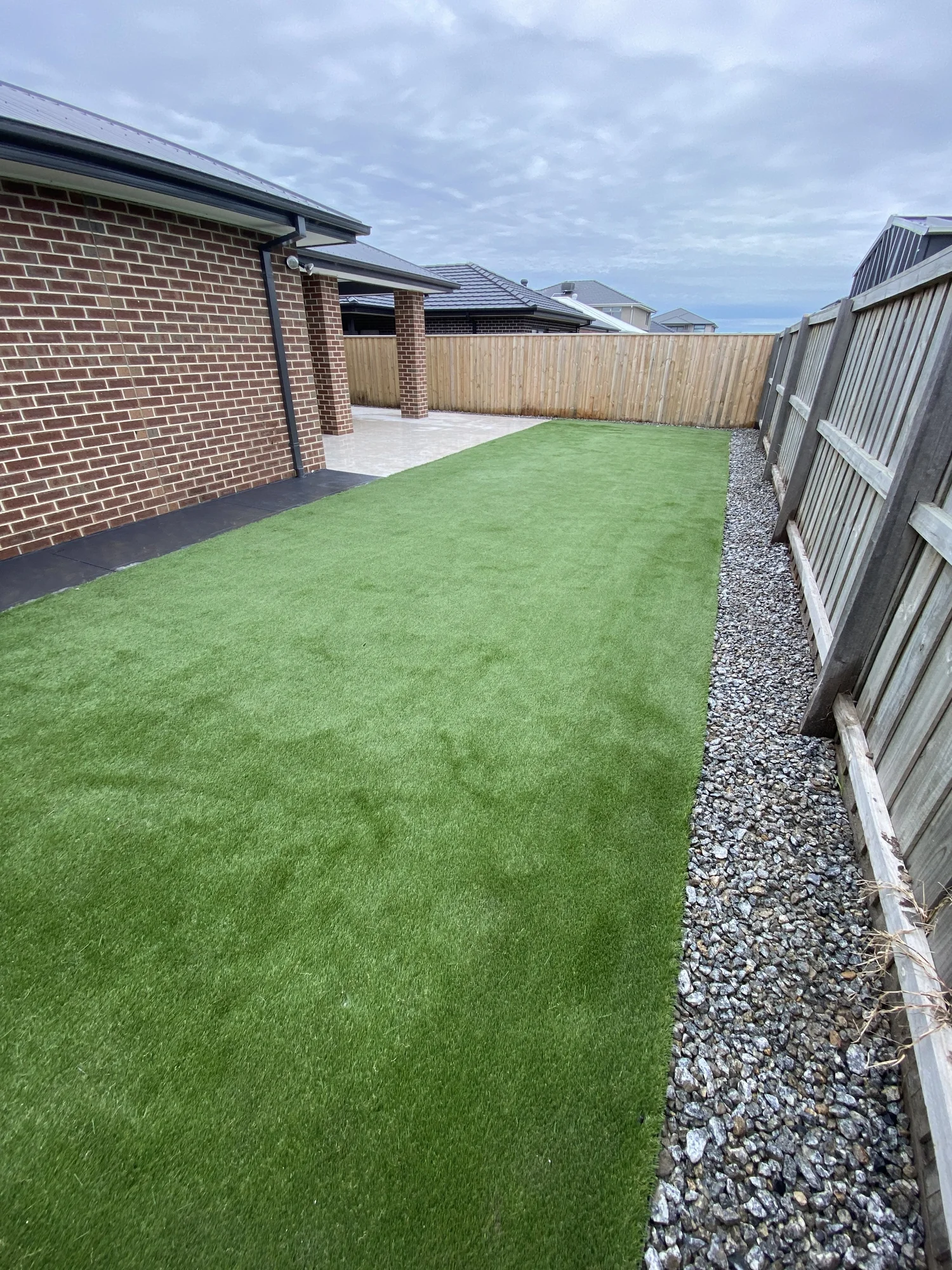
We lay both natural and synthetic turf across Melbourne's south-east and the Hills, and we can sort out the drainage and irrigation at the same time. See our services and gallery. Book a free on-site quote and we'll come out, have a look and go through everything with you.
Sources (accessed 1 October 2026)
- Office of the NSW Chief Scientist & Engineer, Independent review into the design, use and impacts of synthetic turf in public open spaces – Final report, 13 October 2022 (section 4.2 Heat impacts; Appendix 7 literature review). Landing page · PDF copy